
An old cat once walked up on a younger cat that was chasing his tail. The old cat asked, “what are you doing?” The younger replied, I just found out that my happiness is in my tail. I’m going to catch it and be happy. The older cat laughed and said “I heard that too when I was your age. What I found though is that if I just go about my day doing what needs to be done my happiness just seems to follow me wherever I go.
Category Archives: Zen
Street art in Paris; wordvirus.

Street art in London (between goswell road, old Street and clerkenwel), UK, by artist Vera Bugatti. Photo by Vera Bugatti.
It Can Be Done! The Great Middle Way
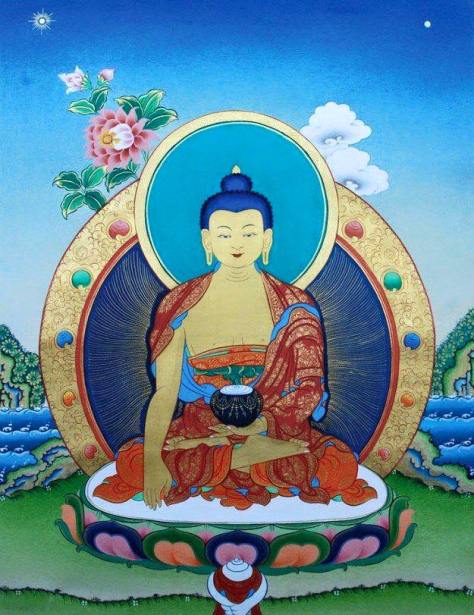
Abandon wrongdoing. It can be done. If there were no likelihood, I would not ask you to do it.
But since it is possible and brings about blessings and happiness, I do ask you to abandon wrongdoing.
Cultivate doing good. It can be done. If it brought deprivation and sorrow, I would not ask you to do it.
But since it brings blessings and happiness, I do ask you: Cultivate doing good.
—Buddha Shakyamuni, Angutara Nikaya
Source: It Can Be Done!
Let´s not fool ourselves; The Great Middle Way
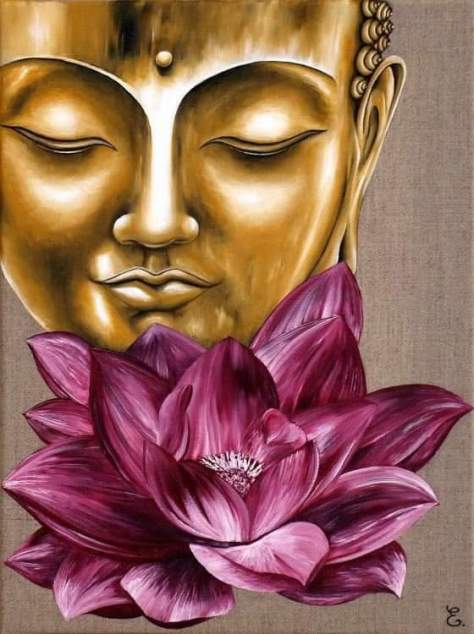
The Buddha gives this instruction in the Griha Vinaya (Rules for Householders, Dharmika Sutra, Kshudraka Agama):
Let him not destroy, or cause to be destroyed,
any life at all, or sanction the acts of those who do so.
Let him refrain even from hurting any creature,
both those that are strong and those that tremble in the world.
If we fail to understand the universality of this injunction, the Buddha clarifies (Kshudraka Agama):
Whether they be creatures of the land or air,
whoever harms here any living being,
who has no compassion for all that live,
let such a one be known as depraved.
And in the Anguttara Agama:
I am a friend of the footless,
I am a friend of all bipeds,
I am a friend of those with four feet,
I am a friend of the many-footed.
…
May all creatures, all breathing things,
all beings one and all, without exception,
experience good fortune only.
May they not fall into any harm.
Should we intend to skirt the First Precept by claiming innocence of the deed if others do the killing for us, He adds (Kshudraka Agama):
One should not kill any living being,
nor cause it to be killed,
nor should one incite any other to kill.
Do never injure any being,
whether strong or weak, in this entire universe!
Source: Let´s not fool ourselves
Appreciation.
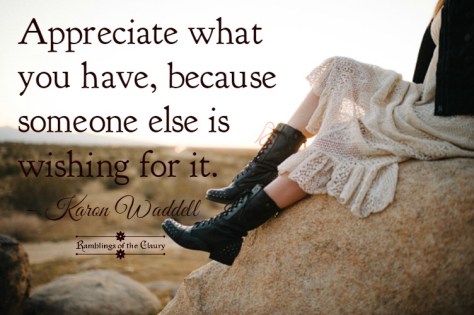 Photo post by @Ramblings_Claury.
Source: Appreciation
Change Your Emotions; GreatMiddleWay
To manifest any given emotional state, we develop a pattern:
We focus our attention on a specific feeling (pleasant or unpleasant) and magnify it
We generate a supporting discursive thought process and identify with it
We assume a compatible breath pattern and physical posture
If you want to change your emotional state, change your focus, your self-talk, your breath, and your posture.
Source: Change Your Emotions
Mindful, present, love.
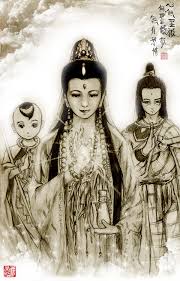
Calm yourself and be still
Feel the air going in and out for this moment
Love entails you to be grounded
There is simply no room for ego
Love with all that you have
With everything you’ve got
Because love is all that you have
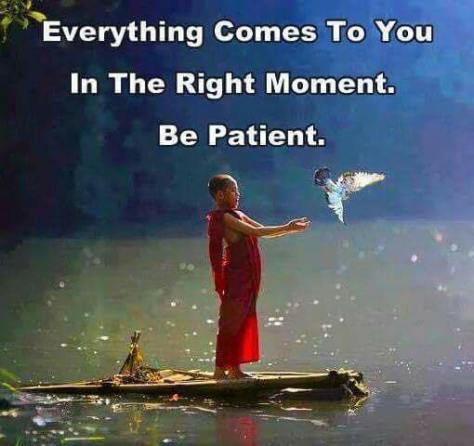
Be patient and love each moment
This moment is all you have
Nina
Patience.
Causes & Conditions; GreatMiddleWay
 : The Dharma teaches that the manifestation of a consequence requires the confluence of multiple causes and conditions. Wrong views, afflicted emotions (attachment, aversion, and indifference), and the habits and tendencies that impel us to act in ways that are unskillful or undesirable constitute the fundamental causes of unbeneficial actions. The conditions that favor such conducts include material circumstances, similarly-inclined company, and situations.
If we desire to avoid those habitual tendencies, it is essential that we avoid conducive conditions for its manifestation. A well-known example is that of a person with alcoholic tendencies, who must avoid proximity and access to alcohol (material circumstances), persons with similar conducts (company), and those events in which this behavior is normative (situations).
We can successfully apply this strategy to all unskillful tendencies, identifying and avoiding the triggers that favor the repetition of any conduct we may wish to eliminate.
Tea . A Zen Story; rewritten by Nina
 
A Buddhist monk who studied and meditated on the teachings of Buddha for over a decade wanted to speak with an enlightened one who dwelled alone in a small temple high in the mountains. He prepared for his journey eager to hear his teaching. After 7 days of rigorous hiking he reached the temple.
The master greeted him and welcomed him inside. The master put some tea on to boil and they sat in silence. The monk became very eager and unsettled in not hearing his teaching. The master poured the tea and sat with the monk. The monk didn’t drink his tea and began questioning his master of Buddha.
The master replied.. “You have studied Buddhism for 20 years and can not simply enjoy this cup of tea?” The monk wept…. as another step to enlightenment lay under his feet….
Nina


You must be logged in to post a comment.