Category Archives: Articles

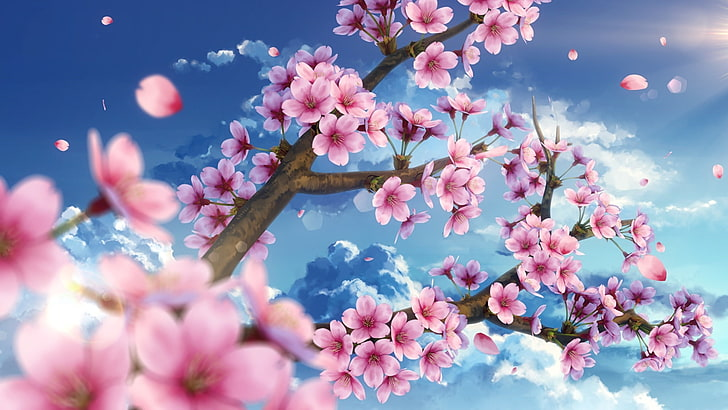
Cherry Blossom Season; Vancouver and Washington DC share a unique bond with the Sakura and Japan.

Here’s some interesting facts about Washington and Vancouver’s interesting Sakura History:

Washington D.C.

Washington DC received its famous cherry blossom trees as a gift of friendship from the people of Japan in 1912, with the first trees planted by First Lady Helen Taft and the Viscountess Chinda.

Here’s a more detailed look at the history:

  • The Gift: The cherry trees, or “Sakura” in Japanese, were a gift from Mayor Yukio Ozaki of Tokyo to the city of Washington, D.C., to enhance the growing friendship between the two nations. 
  • Initial Planting: The first trees, 2,000 in total, arrived in 1910, but were unfortunately destroyed due to disease and insect infestation. 
  • Second Donation: In 1912, another batch of approximately 3,000 trees arrived, and these were planted along the Tidal Basin, marking the start of the beautiful display we see today. 
  • First Lady Helen Herron Taft planted the first tree in West Potomac Park 
  • The Park Service has a stockpile of trees grown from cuttings of the surviving trees 
  • The National Cherry Blossom Festival is a spring celebration in Washington, D.C., commemorating the March 27, 1912, gift of Japanese cherry trees from Mayor Yukio Ozaki of Tokyo City to the city of Washington, D.C. 
  • The majority of the cherry blossom trees around the Tidal Basin are of the Yoshino variety 
  • But another species, the Kwanzan, usually blooms two weeks after the Yoshino trees, giving visitors a second chance to catch the blossoms 

Vancouver BC:

Vancouver’s iconic cherry blossom trees were gifted to the city by the mayors of Kobe and Yokohama in the 1930s, as a gesture of gratitude for the Japanese Canadians who served in World War I.

  • The Gift:In the 1930s, the mayors of Kobe and Yokohama, as a gesture of friendship and in honor of Japanese Canadians who served in World War I, gifted Vancouver with 500 cherry trees. 
  • Initial Planting:These trees were planted in Stanley Park, near the cenotaph dedicated to Japanese Canadian veterans. 
  • Further Planting:Over time, the city continued to plant more cherry trees, and they became a beloved feature of Vancouver’s landscape. 
  • Japanese Consul DonationIn the 1950s, the Japanese consul donated another 300 trees to the city. 
  • Vancouver Cherry Blossom Festival:The Vancouver Cherry Blossom Festival, which celebrates the beauty and joy of these trees, was founded in 2005 to commemorate the gift from Japan. 
  • Today:Vancouver now boasts over 40,000 cherry trees, making it a city renowned for its spring blossoms. 

We are very thankful for these gifts and will continue to cherish and honor them here in Vancouver. As will our neighbors in Washington DC.
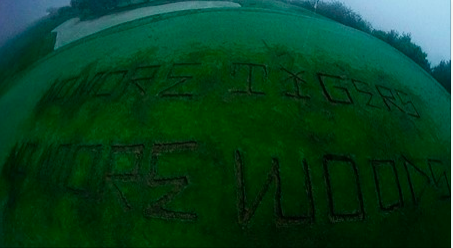
Vandal Eyes: March 15 2017; Donald Trumps Colf Course. “No more tigers. No more woods”. Pow!

Screen Shot 2017-03-15 at 11.31.04 AM.png

Sunday, March 12, 2017 11:40PM

The Trump National Golf Club in Rancho Palos Verdes was defaced overnight by activists presumably attempting to send the president a message about climate change.

Photos and video show a group clad in dark clothing making their way onto the green of the golf course with rakes under the cover of night.

In the video, five people quickly get to work carving large letters into the grass, spelling out “NO MORE TIGERS, NO MORE WOODS.”

The Los Angeles County Sheriff’s Department confirms their dispatch received a call from Trump National around 8:45 a.m. Sunday in relation to the vandalism, but the call was cancelled before deputies arrived on the scene.

There is no investigation underway at this time, according to the LASD. Authorities are aware of the video, but has not been on the premises to verify what was seen on the tape.

A statement issued by activists claiming responsibility for the incident cites the “humanitarian crisis” of global warming and animal welfare as the group’s motive.

“If our King Puppet really wants to ease the strain of immigration, why not make this world more livable for our neighbors, reduce the imperative need for any person to have to bundle their lives into a bag and flee their homes under duress,” the unsigned statement reads.

The group wants to remain anonymous, and Eyewitness News spoke with one of the activists.

“It’s a protest piece against Trump’s administration’s handling of our environmental policies,” the person said. “He’s been very aggressive in gutting a lot of the policies that we’ve had in place for a very long time. We felt it necessary to stand up and go take action against him.”

The person went on to say they chose hole No. 5 as the spot for the vandalism because it was “the most picturesque” spot on the course to display their message.

Trump and his administration are proposing deep cuts to the Environmental Protection Agency that would eliminate programs and staff.

The Trump National Golf Club is an 18-hole public course that charges an annual membership fee of $695 on top of a $160 fee to play each visit.

“Noted as the most expensive golf course ever built, over $250 million dollars has been spent to ensure its prominence,” the course’s website reads.

A manager Eyewitness News contacted from the golf course said he was not authorized to make a statement about the incident.

L.A. County sheriff’s officials estimate the damage is around $20,000.

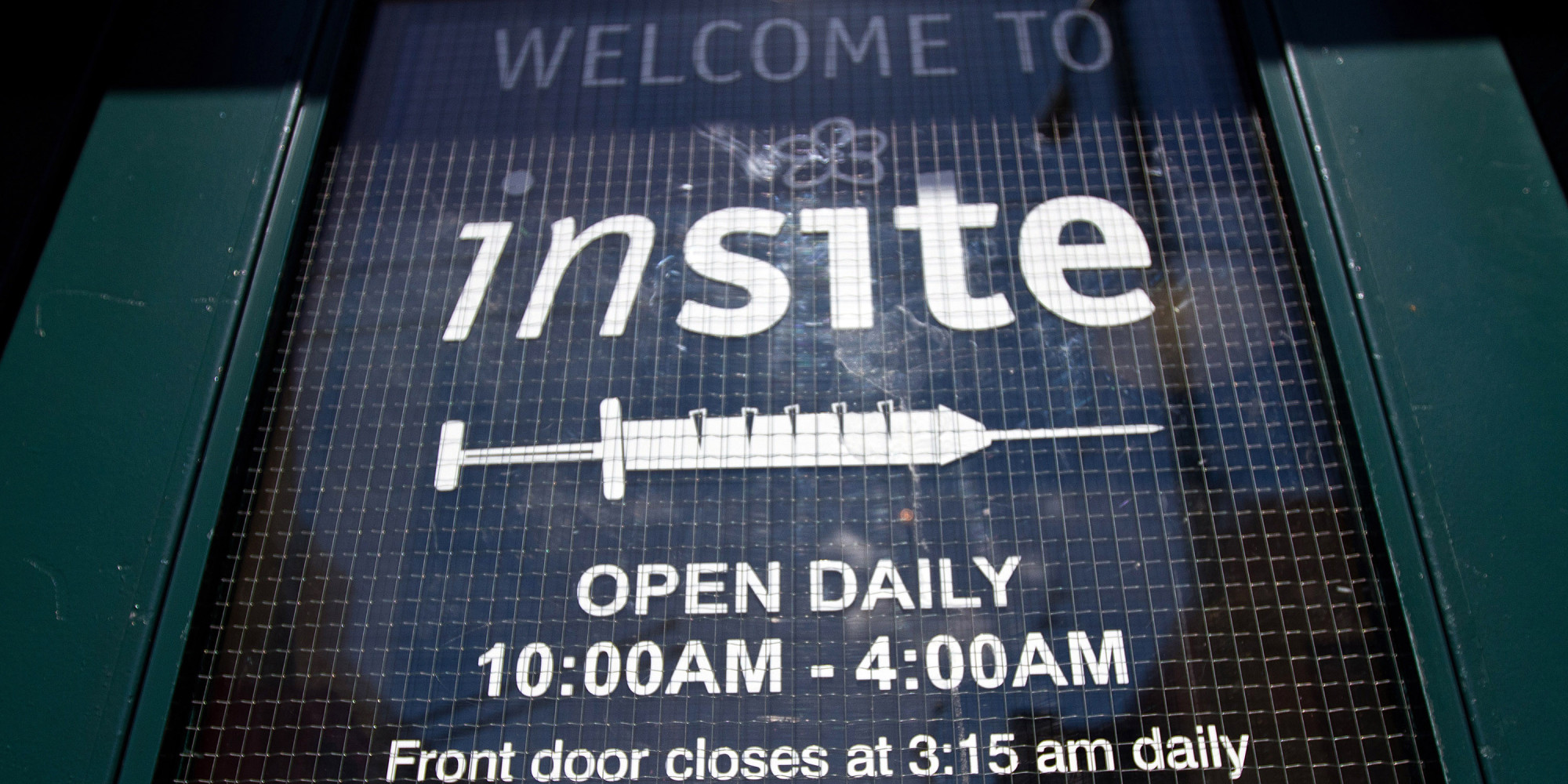
Vancouver “In-Site” / Harm Reduction and How Its Saving Lives.

BC-Insite-www.huffingtonpost.com_.jpg

What is Insite?

In 2003 Vancouver launched In-Site; A facility located in the heart of Vancouvers  Downtown East Side in which injection drug users would be provided with clean needles to inject in a supervised setting. The goal of in-site is not only providing a safe way and place to inject; they also strive to provide other health care services for those struggling with addiction and HIV / AIDS. Funded by Vancouver Coastal health Insite faced many legal barriers and still to this day operates in a rather legal grey area in the attempt to maintain the facility in harm reduction model techniques and advocacy for treatment. But the numbers don’t lie and a great change was brought upon the most vulnerable community in British Columbia.

Vancouvers Aids Epedemic:

 “When you walked around the West End, it would hit you in the face how many people there were with AIDS. In the mid-1990s, we were diagnosing up to 800 people a year, now it’s more like one per week here in B.C.” – Dr. Julio Montaner;

During that time period BC  and in particular in the Downtown East Side, we saw an HIV/AIDS epidemic never seen in North America before. Vancouvers large port city has an extremely large open drug market; as well as having the mildest climate in Canada. The open drug market mixed with  affordable housing in DTES Single room occupancies makes Vancouvers eastside a breeding ground for crime and substance use.

Since the opening of In-Site

The new cases of H.I.V. infection have dropped substancially … “B.C. has had such remarkable success arresting acquired immune deficiency syndrome, or AIDS, that in the past 25 years, new cases have steadily dropped and are now 90 per cent below what they were at the beginning of the epidemic.” – BC Centre For Dissease Control.

Speaking from personal experience in the surrounding areas; the visible injecting / scattered needles and drug crime did drop substantially as well.

This video uploaded in 2006 shows the severity of this areas situation and how In-Site combats the issues first hand.


-Nina