Tag Archives: Dharma

Peace and Clarity – Buddhism and The Dharma Via GreatMiddleWay


These two mental states are conducive to correct knowledge. Which two?

Peace and clarity.By developing peace, what purpose is served? Mind is purified.

By purifying mind, what purpose is served? Craving is abandoned.

By developing clarity, what purpose is served? Wisdom is developed.

By developing wisdom, what purpose is served? Ignorance is abandoned.

Defiled by craving, the mind is not released [from emotional agitation], and defiled by ignorance, wisdom is not developed.

Thus, abandoning craving through peace, there is liberation of the mental fluctuations, and abandoning ignorance through clarity, there is liberation by wisdom.—Buddha

Shakyamuni, Vijjābhāgiya Sutta

Source: Peace and Clarity

The Minutest Action. Buddhism and The Dharma via Great Middle Way


Manifest phenomena arise through a combination of causes and conditions in a sequence of interdependent events.Now, since all phenomena are interconnected in this way, it follows that within the realm of relative truth the law of cause and effect is inescapable: positive and negative actions will inevitably result in happiness and suffering.

Once the causes and conditions are present, nothing can prevent the result from being produced, just as in the spring, if there are seeds in the ground and if the sun gives warmth and the rain moisture, flowers and fruit will appear.

That is why we should always be aware of the potential of even the minutest of our actions.

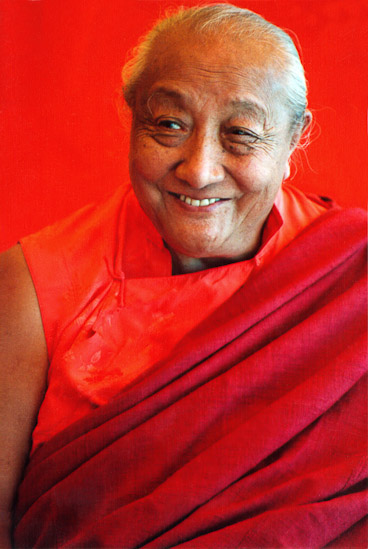
—Dilgo Khyentse Rinpoche

Source: The Minutest Action

Five Keys to Right Speech; Buddhism and The Dharma Great Middle Way ~ —Buddha Shakyamuni

A statement endowed with five factors is well-spoken, not ill-spoken.

It is blameless and un-faulted by knowledgeable people. Which five?

It is spoken at the right time. It is spoken in truth.

It is spoken affectionately. It is spoken beneficially.

It is spoken with a mind of good-will. —Buddha Shakyamuni

—Buddha Shakyamuni

Struggling? Dharma From The Great Middle Way.

Duty accomplished is the greatest satisfaction. When you focus on your own suffering, adverse conditions can overwhelm you, so always remember what it is that you are here to do, and who you are here to help. You are stronger and more capable than you think.

All the Buddhas are with you! They are not figments of your imagination. They are more real than any “flesh and bone” beings you have ever encountered.

You have taken Refuge, and They have welcomed you into Their eternal mandala. You are following Their instruction, obedient to Their Dharma. You have Buddha Nature!

Source: Struggling?

If Your Compassion Does Not Include Yourself, It Is Incomplete – Buddha — The Seeds 4 Life

In life, there will be times of failure, and times of regret. Times of frustration, and times of worry. Moments of insecurity and inadequacy plague even the most confident among us. We will all exp…

Source: If Your Compassion Does Not Include Yourself, It Is Incomplete – Buddha — The Seeds 4 Life

Mindfulness & Introspection – Great Middle Way

I appeal to those desiring to protect their virtuous minds:

always diligently guard your mindfulness and introspection.

—Arya Shantideva

How do we guard mindfulness?

One is mindful to abandon wrong view and to enter and remain in Right View.

One is mindful to abandon wrong intention and to enter and remain in Right Thought.

One is mindful to abandon wrong speech and to enter and remain in Right Speech.

One is mindful to abandon wrong conduct and to enter and remain in Right Conduct.

One is mindful to abandon wrong livelihood and to enter and remain in Right Livelihood.

This is Right Mindfulness.

—Buddha Shakyamuni

How do we guard introspection?

To examine our thoughts, words, and deeds continuously, to determine if they are in accord with the Dharma, is to guard introspection.

Source: Mindfulness & Introspection

1st Precept — Great Middle Way

In the Dhammika Sutta, the Buddha says that ‘not to kill’ means three things: You do not do it yourself; you do not get others to do it; and you do not encourage, condone, applaud, aid, and abet when others do it. What more does one need to prove that one cannot observe this precept […]

via 1st Precept — Great Middle Way