Category Archives: Buddhism

Karma and Blame – The Great Middle Way

Assigning blame is emotionally charged. Whether we assign blame to others or ourselves, the negative emotion that accompanies blame is unskillful.

Blame entails not only assigning responsibility for an unwelcome consequence, but also imputing malice or evil intent to the one performing the act.

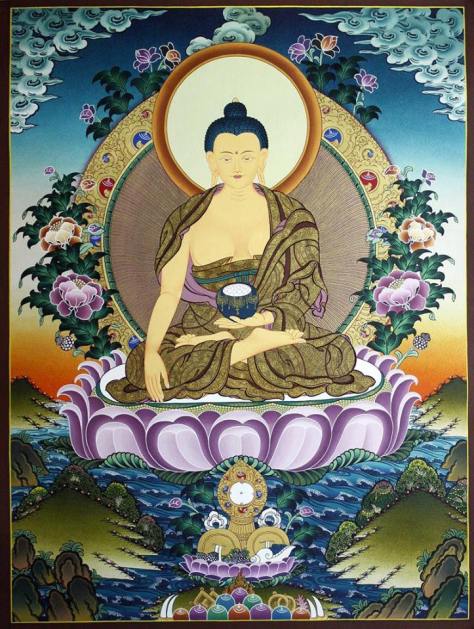
The law of karma, as taught by the Buddha Shakyamuni, lies beyond all concepts of human morality, right and wrong, good and evil. It is merely the understanding that causes produce effects. Gravity does not intend for us to fall and hurt ourselves when we trip; fire does not intend to cause us pain when our skin is burned by a flame.

When water comes in contact with a surface, that surface becomes wet. We do not blame the water for making the surface wet –that is its nature. Similarly, when our wrong views (ignorance of the nature of self and all phenomena) and afflicted emotions (attachment, aversion, and indifference) lead us to act in unskillful ways, there is no question of guilt and blame.

The purpose of acknowledging the law of karma is instructive, not punitive. When we understand that there is a relationship of cause and effect between our actions and the consequences we experience, we are liberated from victimhood. We are no longer subject to a random universe where evil befalls us without rhyme or reason. We are free to make our own way.

We do not study the law of karma to learn the specific reasons ‘why’ something happens. That exercise is futile. We understand the law of karma in order to make the determination to place positive, skillful causes in the continuum of our experience from here onwards.

The law of karma, of cause and effect, is not meant to lead us to recrimination, guilt, and blame. On the contrary, it is the acceptance of our capacity to be free from suffering and the causes of suffering, and embrace happiness and the causes of happiness.

Source: Karma and Blame

Avoid Both – The Great Middle Way

There are two extremes that are not to be indulged in

by one who has gone forth. Which two?

That which is devoted to sensual pleasure

with reference to sensual objects:

base, vulgar, common, ignoble, unprofitable;

and that which is devoted to self-affliction:

painful, ignoble, unprofitable.

Avoiding both of these extremes,

the Middle Way realized by the Tathagata

—producing vision, producing knowledge—

leads to calm, to direct knowledge, to self-awakening, to liberation.

―Buddha Shakyamuni, Dharmachakrapravartana Sutra

Source: Avoid Both

The 37 Practices of the Bodhisattva | Great Middle Way.
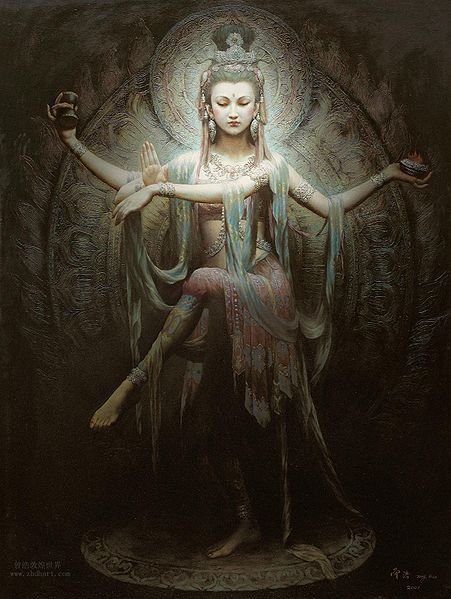
The 37 Practices of the Bodhisattva | Great Middle Way.

tumblr_lh1y3lx6ou1qgiowmo1_500

by Tashi Nyima


A.1: Though he sees that in all phenomena there is no coming and going, He strives solely for the sake of beings. To the sublime teacher inseparable from the Lord of Compassion, the Protector of Beings, I pay constant homage with respectful body, speech, and mind.

A.2: The perfect Buddhas —source of happiness and ultimate peace— exist through having accomplished the sacred Dharma, And that, in turn, depends on knowing how to practice it. I shall therefore explain the practice of the Bodhisattvas.

B.1: Now that I have this great ship, a precious human life, so hard to obtain, I must carry myself and others across the ocean of samsara. To that end, to listen, reflect, and meditate day and night, without distraction, is the practice of a Bodhisattva.

B.2: In my native land waves of attachment to friends and kin surge, hatred for enemies rages like fire, the darkness of indifference, not caring what to adopt or avoid, thickens. To abandon my native land is the practice of a Bodhisattva.

B.3: When unfavorable places are abandoned, disturbing emotions gradually fade. When there are no distractions, positive activities naturally increase. As awareness becomes clearer, confidence in the Dharma grows. To rely on solitude is the practice of a Bodhisattva.

B.4: Close friends who have long been together will separate. Wealth and possessions gained with much effort will be left behind. Consciousness, a guest, will leave the lodge of the body. To give up the concerns of this life is the practice of a Bodhisattva.

B.5: In bad company, the three poisons grow stronger, study, contemplation, and cultivation decline, and loving-kindness and compassion vanish. To avoid unsuitable friends is the practice of a Bodhisattva.

B.6: Through reliance on a true spiritual friend, my faults will fade and good qualities will grow like a waxing moon. To consider him even more precious than my own body is the practice of a Bodhisattva.

B.7: Whom can worldly gods protect, themselves imprisoned in samsara? To take refuge in the Three Jewels, who never fail those they protect, is the practice of a Bodhisattva.

B.8: The Buddha taught that the unendurable suffering of the lower realms is the fruit of unvirtuous actions. Therefore, to never act unvirtuously, even at the cost of my life, is the practice of a Bodhisattva.

B.9: Like dew on grass, the delights of the three worlds by their very nature evaporate in an instant. To strive for the supreme level of liberation that never changes is the practice of a Bodhisattva.

B.10: If all the mothers who have loved me since beginningless time are suffering, what is the use of my own happiness? So, with the aim of liberating limitless sentient beings, to set my mind on enlightenment is the practice of a Bodhisattva.

B.11: All suffering, without exception, arises from desiring happiness for myself, while perfect enlightenment is born from the thought of benefiting others. Therefore, to really exchange my own happiness for the suffering of others is the practice of a Bodhisattva.

B.12: If someone driven by great desire seizes all my wealth, or induces others to do so, to dedicate to him my body, possessions, and past, present, and future merit is the practice of a Bodhisattva.

B.13: If, in return for not the slightest wrong of mine, someone were to cut off even my very head, through the power of compassion to take all his negative actions upon myself is the practice of a Bodhisattva.

B.14: Even if someone says all sorts of derogatory words about me and proclaims them throughout the universe, in return, out of loving-kindness, to extol that person’s qualities is the practice of a Bodhisattva.

B.15: Even if in the midst of a large gathering someone exposes my hidden faults with insulting language, to bow to him respectfully, regarding him as a spiritual friend, is the practice of a Bodhisattva.

B.16: Even if one I’ve lovingly cared for like my own child regards me as an enemy, to love him even more, as a mother loves a sick child, is the practice of a Bodhisattva.

B.17: Even if my peers or my inferiors, out of pride, do all they can to debase me, to respectfully consider them like my teachers on the crown of my head, is the practice of a Bodhisattva.

B.18: Even when utterly destitute and constantly maligned by others, afflicted by terrible illness and prey to evil forces, to still draw upon myself the suffering and wrongdoing of all beings and not lose heart is the practice of a Bodhisattva.

B.19: Though I may be famous, and revered by many, and as rich as the god of wealth himself, to see that the riches and glory of the world are without essence, and to be free of arrogance, is the practice of a Bodhisattva.

B.20: If I do not conquer my own hatred, the more I fight outer enemies, the more they will increase. Therefore, with the powers of loving-kindness and compassion, to tame my own mind is the practice of a Bodhisattva.

B.21: Sense pleasures and desirable things are like saltwater —the more I taste them, the more my thirst increases. To abandon promptly all objects which arouse attachment is the practice of a Bodhisattva.

B.22: All that appears is the work of my own mind; the nature of mind is primordially free from conceptual limitations. To recognize this nature and not to entertain concepts of subject and object is the practice of a Bodhisattva.

B.23: When encountering objects which please me, to view them like rainbows in summer, not ultimately real, however beautiful they appear, and to relinquish craving and attachment, is the practice of a Bodhisattva.

B.24: The various forms of suffering are like the death of a dream child —by clinging to deluded perceptions as real I exhaust myself. Therefore, when encountering unfavorable circumstances, to view them as illusions is the practice of a Bodhisattva.

B.25: If those who wish for enlightenment must give away even their own bodies, how much more should it be true of material objects? Therefore, without expectation of result or reward, to give with generosity is the practice of a Bodhisattva.

B.26: If, lacking discipline, I cannot accomplish my own good, it is laughable to think of accomplishing the good of others. Therefore, to observe discipline without samsaric motives is the practice of a Bodhisattva.

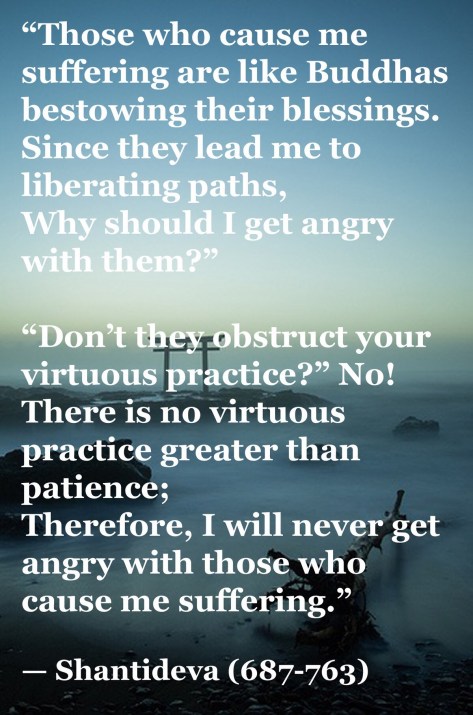
B.27: For a Bodhisattva who desires the joys of virtue, all who harm him are like a precious treasure. Therefore, to cultivate patience toward all, without resentment, is the practice of a Bodhisattva.

B.28: Merely for their own sake, even those who long for liberation make efforts like one whose hair is on fire. Seeing this, for the sake of all beings, constant effort, the source of excellent qualities, is the practice of a Bodhisattva.

B.29: Knowing that through profound insight, thoroughly grounded in sustained calm, the disturbing emotions are completely conquered, to practice the concentration which utterly transcends the four formless states is the practice of a Bodhisattva.

B.30: In the absence of wisdom, perfect enlightenment cannot be attained through the other five perfections alone. Therefore, to cultivate wisdom combined with skillful means and free from the three concepts is the practice of a Bodhisattva.

B.31: If I do not examine my own defects, though outwardly a Dharma practitioner, I may act against the Dharma. Therefore, continuously to examine my own faults and give them up is the practice of a Bodhisattva.

B.32: If, impelled by negative emotions, I relate the faults of other Bodhisattvas, I will myself degenerate. Therefore, to not talk about the faults of anyone who has entered the path is the practice of a Bodhisattva.

B.33: Offerings and respect may bring discord and cause study, contemplation, and cultivation to decline. Therefore, to avoid attachment to friends and benefactors is the practice of a Bodhisattva.

B.34: Harsh words disturb the minds of others and spoil my own practice. Therefore, to give up coarse speech, which others find unpleasant, is the practice of a Bodhisattva.

B.35: When emotions become habitual, they are hard to counteract with antidotes. Therefore, with mindfulness and vigilance, to crush attachment and other negative emotions the moment they arise is the practice of a Bodhisattva.

B.36: In short, wherever I am, whatever I do, to be continually mindful and vigilant, asking, “What is the state of my mind?” and accomplishing the good of others is the practice of a Bodhisattva.

B.37: Dedicating to enlightenment through wisdom purified of the three concepts all merit achieved by such endeavor, to remove the suffering of numberless beings, is the practice of a Bodhisattva.

C.1: Following the teachings of the holy beings, I have arranged the points taught in the sutras, tantras, and shastras as The Thirty-seven Practices of the Bodhisattva for the benefit of those who wish to train on the path.

C.2: Since my understanding is poor, and I have little education, this is no composition to delight the learned; but as it is based on the sutras and teachings of holy beings, it is genuinely the practice of the Bodhisattvas.

C.3: However, it is hard for someone unintelligent like me to fathom the great waves of the Bodhisattvas’ activities, so I beg the forgiveness of the holy ones for my contradictions, irrelevances, and other mistakes.

C.4: Through the merit arising from this and through the power of the sublime bodhichitta, relative and absolute, may all beings become like the Lord of Compassion, who is beyond the extremes of samsara and nirvana.

–Gyalse Ngulchu Tokme Zangpo (1297-1371)

Real Peace & Happiness – Great Middle Way

by Tashi Nyima
chatralrinpoche

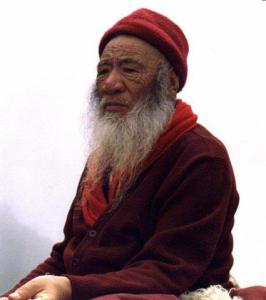
To obtain real peace and happiness in this world, one has simply to follow the path of ahimsa —nonviolence.

If we do not like to experience any kind of pain or suffering, how can we expect another creature, whether big or small, to feel otherwise?

There is no better prayer or service we can offer to the Buddha than being thoughtful, kind, and compassionate, and abstaining from taking the life of any fellow human being, animal, bird, fish or insect.

Source: Real Peace & Happiness

Shaolin. 10 Tips to Living Longer.

10-tips-on-how-to-stay-young-forever-by-shaolin-monk.jpghttp://www.criticalcactus.com/shaolin-monk-reveals-10-tips-to-live-longer/

Shaolin monk; Tips to living longer…

1) Don’t think too much. Thinking takes energy. Thinking can make you look old.

The benefits of meditating (not thinking) are many and various. Read this Psychology Today article on 20 scientific reasons to meditate.

2) Don’t talk too much. Most people either talk or do. Better to do.

Actions speak louder than words. Once you do it, you will know what is involved and you’ll learn from the experience. You’ll get wiser. Remember the Niels Bohr quote, “An expert is a man who has made all the mistakes which can be made, in a narrow field”.

3) When you work, work for 40 minutes then stop for 10 minutes.

When you look at something all the time, it can damage your eyes and also your internal organs and peace.

Even better, meditate in between. Just take a short break from not only your work but your thoughts as well. Creativity will spark as a result. A famous example is Albert Einstein who is said to have become one of the greatest scientists who ever lived because he meditated a few times a day. He famously said it was “the way to get answers even before you asked the questions”.

4) When you are happy, you need to control your happiness, if you lose control then you damage your lung energy

In Traditional Chinese Medicine, the lungs are considered the “tender organ” because they open directly to the external environment. The lungs are vulnerable to external disease-causing organisms such as bacteria or viruses.

Lung energy is called Lung Qi or Lung or Lung Yin. Sadness and grief as well as emotional disturbances, such as excitement from happiness, cause imbalances in the lung energy and are considered harmful.

5) Don’t worry or get angry

“Don’t worry too much or get angry because this damages your liver and your intestines”.

Suwen (素問), a.k.a. the First Text, or the Basic Questions, covers the theoretical foundation of Traditional Chinese Medicine (TCM).

Suwen says “The five yin-organs of the human body produce five kinds of essential qi, which bring forth joy, anger, grief, worry, and fear.”

The Seven Emotions

According to TCM, certain organs are related to 7 specific, basic emotions which include anger, joy, worry, pensiveness (feeling sad while deep in thought), sadness, fear, and shock (fright). The liver is related to anger, the heart to joy, the spleen to pensiveness, the kidneys to fear, the lungs to anxiety.

Western medicine has only recently acknowledged this link between mind and body.

6) Don’t eat too much

“When you eat food don’t eat too much, always make sure you are not quite full as this can damage your spleen. When you feel a bit hungry then eat a little.”

In Traditional Chinese Medicine, the spleen is considered the main digestive organ. Its function is closely tied to both the function of the stomach (to which it is paired) and the pancreas. Excessive food intake can inhibit the Spleen’s qi, or energetic function.

Be extra careful with excessive consumption of foods and beverages that are high in sugar and refined carbohydrates, raw, cold in temperature, as well as alcohol, drugs, medications, and artificial food additives.

7) Take your time

When you do things, take your time, don’t hurry too much. Remember the saying “Hasten slowly you will soon arrive” — Jetsun Milarepa, one of Tibet’s most famous yogis and poets who lived from 1052-1135

As Ram Dass says; ‘Be here now’. The past and future don’t exist, except for in your mind. Your whole life exists of the now and nothing but the now. If you hurry you may get quickly to the gym or home but you’ll miss the reality of the present moment.

8) Be physically active

“If you never exercise, just peace, meditation, soft training, Qigong, then this doesn’t give you Yang energy so you use up your Yang energy.”

9) Balance your exercises with Qigong

“If you only do physical exercise all the time and you never do Qigong this makes you lose your balance and you will become impatient. You lose the Yin of your body. Exercise balances the Yin and the Yang.”

In Chinese philosophy, activities can be divided into Yang and Ying type. Yang involves “fiery energy”. Fast acting, exciting, adrenalin-infused sports such as rock climbing, bungee jumping, kick boxing, and baseball fall in the Yang category. These yield a ‘high’ feeling afterwards.

Yoga, meditation, Taichi, and Qigong (Neigong) belong to the Yin category, which is peaceful, slow, inner-focused, producing a feeling of peace and relaxation during or after exercise.

Qigong is a Chinese system of physical exercises, meditation, and breathing control related to tai chi. It teaches you to use your body, mind, and spirit together to unblock energy and balance Yin and Yang energy in the body.

10) Take advantage of Shaolin Kung Fu

“Shaolin Gong Fu (known as kung fu, gong fu, gung fu) gives you everything. The purpose of our training is to balance our Yin and Yang. How many hours is not important. It’s down to knowing what your body needs.”

In Western society we consider medicine as as a way of dealing with illness and disease. Traditional Chinese Medicine focuses on achieving wellbeing and health through the cultivation and maintenance of order, harmony, and balance in our lives.

This post is based on Ten Tips From A Shaolin Monk On How To Stay Young Forever by Shife Yan Lei.

About Shifu Yan Lei:

Shifu Yan Lei is a 34th generation Shaolin Master from the Shaolin Temple in Henan Province, China. He was born in 1973 in the Xin Jiang province of China, a remote region which borders on Russia, Mongolia and Pakistan.

He began studying martial arts at the age of fourteen when he went to study at the Shaolin Temple Monastery. He is now one of the foremost Shaolin Masters teaching in the West. He specializes in Shaolin Steel Jacket (sometimes called Iron Shirt or Iron Vest), martial Qigong, medical Qigong, Qi lifting, Bone Marrow Cleansing Qigong and Sanshou fighting.

He is the founder of Yan Lei Press and Productions, which produce a graded system of Shaolin Qigong and Shaolin Kung Fu instructional DVDs and books.

More than ten DVDs now exist, selling in the thousands worldwide. Shifu Yan Lei is the author of a book : Instant Health: The Shaolin Qigong Workout For Longevity. And a forthcoming book: Instant Fitness: The Shaolin Kung Fu Workout

References

University of Minnesota, Taking Charge Of Your Wellbeing.

Deficiency of Lung Qi, Holo Sapiens.com