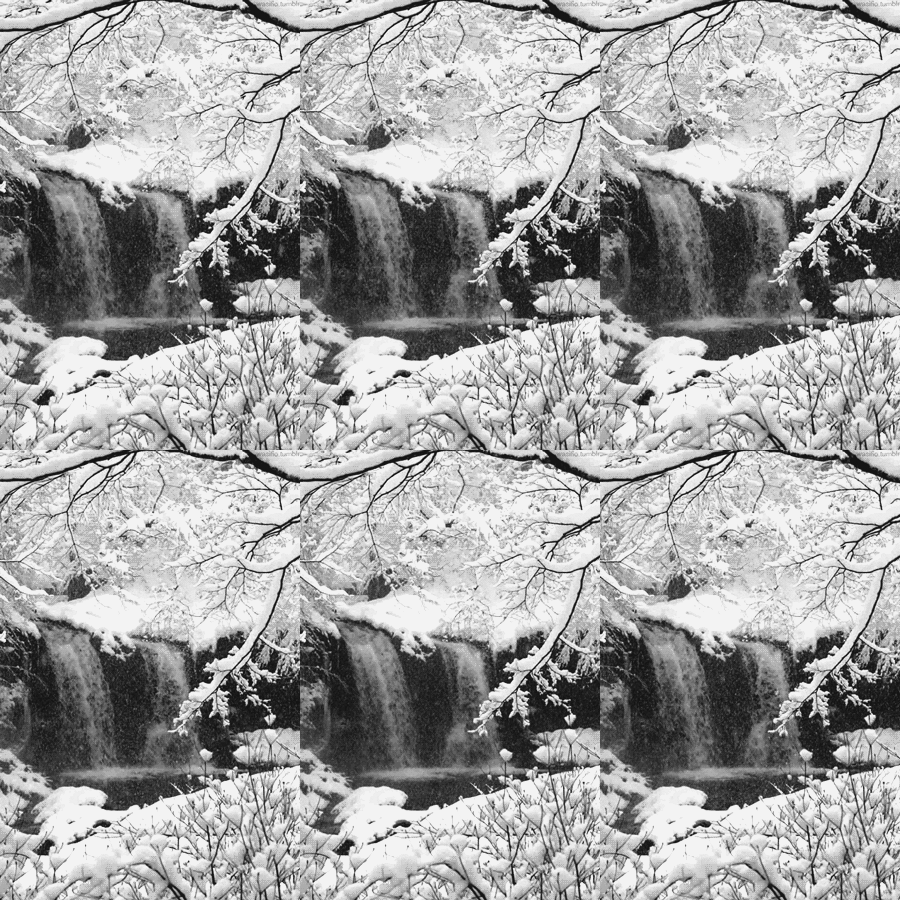
I will practice coming back to the present moment, not letting regrets and sorrow drag me back into the past, or letting anxieties, fears, or cravings pull me out.
~ Thich Nhat Hanh Zen, Tao, Chan …

I will practice coming back to the present moment, not letting regrets and sorrow drag me back into the past, or letting anxieties, fears, or cravings pull me out.
~ Thich Nhat Hanh Zen, Tao, Chan …
Two monks were returning to the monastery in the evening. It had rained and there were puddles of water on the road sides. At one place a beautiful young woman was standing unable to walk across because of a puddle of water. The elder of the two monks went up to a her lifted her and left her on the other side of the road, and continued his way to the monastery.
In the evening the younger monk came to the elder monk and said, “Sir, as monks, we cannot touch a woman ?”
The elder monk answered “yes, brother”.
Then the younger monk asks again, “but then Sir, how is that you lifted that woman on the roadside ?”
The elder monk smiled at him and told him ” I left her on the other side of the road, but you are still carrying her.”
-Unknown
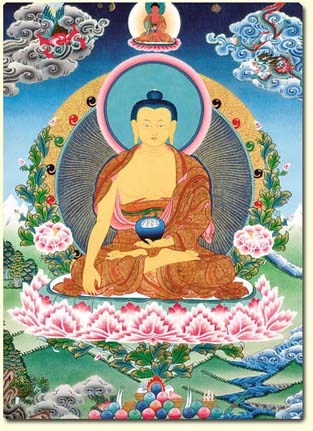 Here and There;
Post by Tashi Nyima
As a river, when full, must flow
and reach and fill the distant plain,
so what is given here, indeed,
will reach and bless the beings there.
As water on a mountain top
must soon descend and fill the plain,
so what is given here, indeed,
will reach and bless the beings there.
—Buddha Shakyamuni, Nidhikanda Sutta, Khuddakapatha
Source: Here and There
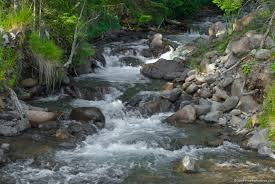
Learn this from the river’s flow
in mountain cleft and chasm:
the rivulets gush loudly,
the great stream moves silently.
Empty things boom loud.
The full are ever quiet.
The fool is like an empty pot;
the sage is full.
—Buddha Shakyamuni
Source: Empty & Full
Nothing belongs to us. Only our attachment to things belongs to us.
Source: The only thing
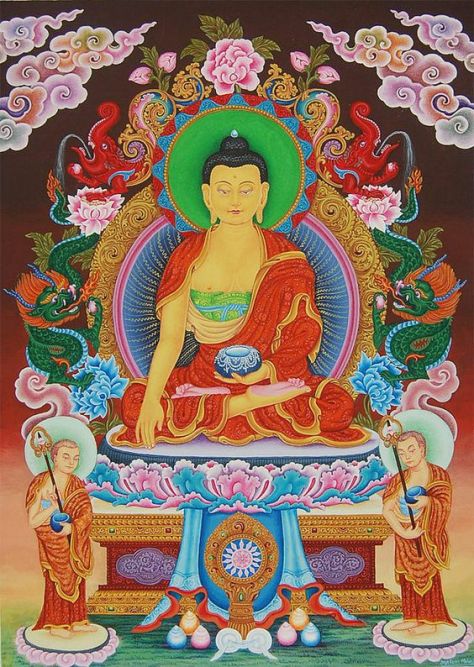
Those who cultivate compassion can give what is difficult to give;
can tolerate patiently what is difficult to tolerate;
and can do what is difficult to do.
Compassion is the root of all virtue.
—Buddha Shakyamuni, Sutra of Lay Morality
Source: Root of All Virtue
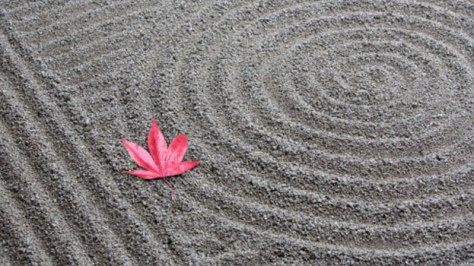
Known as trataka in Hinduism, this method of meditation involves starting at a single point. This point can be anything, such as your favorite painting, a tree in the distance or the moon at night.
Like most other styles of meditation, gazing meditation will help you calm the restless mind. If you have stress or anxiety, take a few minutes to practice gazing meditation.
This style of meditation is especially soothing when you’re in the wilderness and gaze at something beautiful, such as a river, a beautiful tree or the sunset…
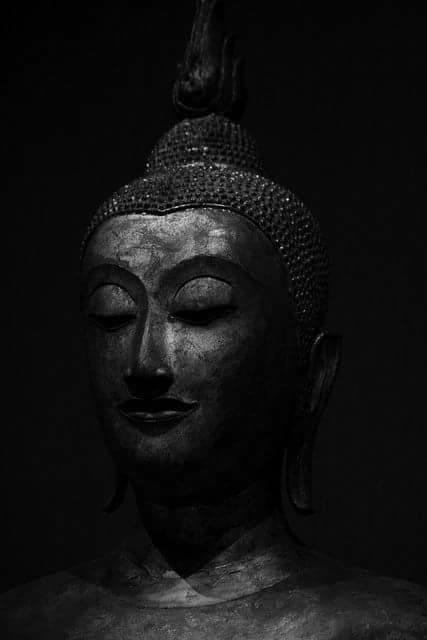
Mistaking the false for the true
and the true for the false,
you overlook the heart
and fill yourself with desire.
See the false as false,
and the true as true.
Look into your heart.
Follow your nature.
—Buddha Shakyamuni
Source: Your Nature
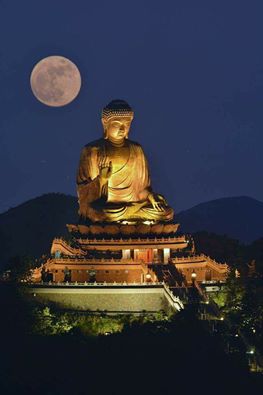
Let me be able and upright,
straightforward and gentle in speech,
humble and not conceited,
contented and easily satisfied,
unburdened with duties and frugal in my ways.
Peaceful and calm and wise and skillful,
not proud or demanding in nature,
let me not do the slightest thing
that the wise would later reprove.
In gladness and in safety,
may all beings be at ease.
Whatever living beings there may be
—whether they are weak or strong, omitting none,
the great or the mighty, medium, short or small,
the seen and the unseen,
those living near and far away,
those born and to-be-born—
may all beings be at ease!
Let me not deceive another,
or despise any being in any state.
Let me not through anger or ill-will
wish harm upon another.
Even as a mother protects with her life
her child, her only child,
so with a boundless heart
will I cherish all living beings.
I will radiate kindness over the entire world
—spreading upwards to the skies,
and downwards to the depths,
outwards and unbounded—
freed from hatred and ill-will.
Whether standing or walking,
seated or lying down,
free from weariness,
I will sustain this recollection.
This is the sublime abiding.
—Buddha Shakyamuni, Maitri Sutra
Source: Sublime Abiding

The images we see on a mirror are reflections, but they lack substance. In the same way, conventional phenomena arise from (and in) the basis-of-all, but they are not ultimately real.
If the mirror is dirty or warped, the reflections will be dull or distorted. Similarly, some of our perceptions can be more valid (clear) than others.
Appearances are false: insubstantial, impermanent, and dependent on multiple causes and conditions. And yet, they arise continuously.
Source: Appearances


You must be logged in to post a comment.