
Category Archives: Buddhism
“Is there anything I can do to make myself Enlightened?” — Zen Flash
Student: “Is there anything I can do to make myself Enlightened?” Teacher: “As little as you can do to make the sun rise in the morning.” Student: “Then what use are the spiritual exercises you prescribe?” Teacher: “To make sure you are not asleep when the sun begins to rise.” ~Anthony de Mello Source: Tao […]
via “Is there anything I can do to make myself Enlightened?” — Zen Flash
Visions of Earth: Thailand
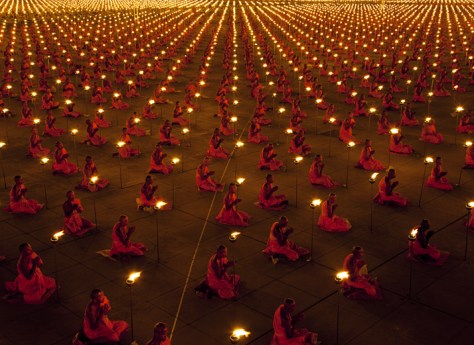
Eight Symbols of Tibetan Buddhism — Rise Like A Lotus

Tibetan Buddhism is rich with imagery and symbolism. I’m pretty new to it, so I’m still learning these. (Source: buddhanet.net) Right-coiled White Conch Right-coiled White Conch The white conch which coils to the right symbolises the deep, far-reaching and melodious sound of the Dharma teachings, which being appropriate to different natures, predispositions and aspirations of […]
No Fear — Great Middle Way

From attachment springs fear. For one who is wholly free from attachment there is no grief, whence then fear? From lust springs grief, from lust springs fear. For one who is wholly free from lust there is no grief; whence then fear? From craving springs grief, from craving springs fear. For one who is […]
5 liars — Zen ; Great Middle Way

greatmiddleway.wordpress.com by Tashi Nyima June 18, 2016 The aggregate of form, the material body, tells me where I am. The aggregate of feeling tells me how I am. The aggregate of cognition tells me what I am. The aggregate of volition tells me why I am. The aggregate of consciousness tells me I am the […]
Peace

If Your Compassion Does Not Include Yourself, It Is Incomplete – Buddha — The Seeds 4 Life

In life, there will be times of failure, and times of regret. Times of frustration, and times of worry. Moments of insecurity and inadequacy plague even the most confident among us. We will all experience some level of self-doubt and self-criticism, and this is what makes the practice of self-compassion so vitally important. Today, rather…
via If Your Compassion Does Not Include Yourself, It Is Incomplete – Buddha — The Seeds 4 Life
The Tibetan Book of Proportions — Buddhist Art News

The Public Domain Review offers a series of images from “an eighteenth-century pattern book consisting of 36 ink drawings showing precise iconometric guidelines for depicting the Buddha and Bodhisattva figures.” Original text at the Getty. [link]
Zen and Meditation. Ancient Poetry
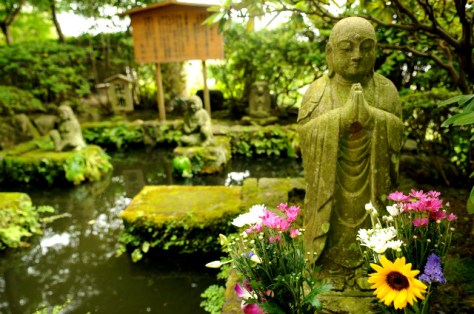
The Third Zen Patriarch, Janzhi Sengcan, wrote in his poem Xinxin Ming:
“The more you talk and think about it, the further astray you wander from the truth. Stop talking and thinking, and there is nothing you will not be able to know. To return to the root is to find the meaning, but to pursue appearances is to miss their source. At the moment of inner enlightenment there is a going beyond appearances and emptiness.”
These words were written almost 1,500 years ago in China.


You must be logged in to post a comment.