Category Archives: Activism

Rage and Outrage – Great Middle Way

Some well-intentioned persons believe that rage and outrage are necessary for beneficial activism.

However, all variations of anger, while making us feel “sharp”, actually dull the mind and make us ineffective. Anger narrows our focus, and makes us blind to context. Anger exhausts and demoralizes. Anger destroys. Anger saps power.

Peace and radical compassion are the essential components of effective activism.

Source: Rage and Outrage

Human Trafficking and Modern Day Slavery in Malaysia ; Palm Oil. Endorsed by brand name products.

images

I received an email this morning via someofus.org; It reads as such.

Nina,

What’s the link between household brands Head & Shoulders, Covergirl, and Gillette?

Modern slavery.

The brands’ parent company, Procter & Gamble (P&G), purchases conflict palm oil from the world’s largest palm oil plantation operator, Malaysian company Felda Global Ventures (Felda). Felda deals in the human trafficking of its plantation workers, confiscating close to 30,000 passports, and still works with labor contractors and recruiters who charge enormous fees to trafficked foreign workers.

Plantation workers are trapped in modern day slavery, all to produce palm oil that ends up in P&G products. The multinational consumer goods company is well aware of the problem, and yet still buys conflict palm oil from its joint venture partner Felda.

P&G is getting ready to publish its 2016 sustainability progress report, and the company knows that customers and investors are watching. Now’s the perfect moment to force P&G to pressure its supplier and business partner to do the right thing and stop this human catastrophe. Felda can’t afford to lose a partner like P&G.

Tell Procter & Gamble: cut conflict palm oil from your company’s supply chain and ensure that modern day slavery does not continue in Felda Global Ventures’ operations.

Procter & Gamble can’t pretend to ignore the plantation workers’ ordeal. A 2015 Wall Street Journal article documented the human rights violations happening in Felda palm oil plantations. Because they’re complicit, companies like Procter & Gamble are responsible for the plight of modern slaves either working on palm oil plantations or dying on their way there. Last year, Thai and Malaysian police found nearly 150 bodies of people thought to have died in human traffickers’ camps at the border.

Mohammad Rubel, who was smuggled into Malaysia by traffickers and was later held captive in a jungle camp, says he worked on a palm plantation for six months without receiving a salary. Muhi, another worker, says that “there is no escape,” and that Felda contractors “bring policemen and threaten to send us to jail.” In Malaysia illegally and without passports, these workers are trapped for the sake of cheap palm oil.

Over the past two years, we pushed companies like McDonald’s and Starbucks coffee to adopt zero deforestation palm oil policies. We’ve also focused our efforts on the improvement of human and workers’ rights in the palm oil sector with campaigns targeting PepsiCo and Unilever. It’s time for Procter & Gamble to stand by its principles and save close to 30,000 palm oil workers from modern slavery.

Tell Procter & Gamble: cut conflict palm oil from your company’s supply chain and ensure that modern day slavery does not continue in Felda Global Ventures’ operations.

Thanks for all that you do,
Hanna, Fatah, and the team at SumOfUs

CBC Exposes Walmart; throws Massive amounts of useable foods away / doesn’t recycle.

Walmart insider says ‘heartbreaking’ amount of food dumped in trash
Retailer says discarded items are unsafe to eat, but ex-worker says they still looked good
Daniel Schoeler says Walmart workers tossed what appeared to be perfectly good food into trash compactors on almost every shift he worked. (Erica Johnson/CBC)
A former worker at almost a dozen Walmart stores in the Vancouver area is speaking out about what he calls “disturbing” food waste at the big retailer.

Daniel Schoeler says on every shift at almost every store, he saw loads of what appeared to be perfectly good food dumped in the trash, even though Walmart says it only discards inedible food.

“It’s heartbreaking when you go home at the end of the day, to see that much food get thrown out,” Schoeler told Go Public.

“They just toss it freely.”

For six years, Schoeler worked for a company contracted by Walmart to assemble bikes, patio furniture and other products in the back of Walmart stores. He left last spring.

He reels off a grocery list of items he says he regularly saw tossed in the trash compactor: tubs of margarine, yogurt and sour cream, bags of apples and potatoes, watermelons, cottage cheese, cans of food with expiry dates that hadn’t passed, cheese, butter and baked goods.

Jenny Rustemeyer
Jenny Rustemeyer says she and Grant Baldwin were able to bring home about $20,000 worth of dumpster food in six months, ‘and that is just the smallest portion of what we found in the dumpsters.’ (Jenny Rustemeyer)
CBC Marketplace has launched a national investigation and learned of large amounts of waste at other Walmart stores across the country. In the Toronto area, they repeatedly found outdoor garbage bins piled high with everything from produce to baked goods, frozen foods, meat and dairy products.

The Marketplace full investigation airs Friday, Oct. 28.

“It bothers me a tremendous amount,” says Schoeler, who says he only felt he could speak out after he quit.

“So many low-income people shop at Walmart. They’re scraping to buy this stuff, yet Walmart is just throwing it out the back door.”

Walmart responds

When Go Public contacted Walmart for comment, spokesperson Alex Roberton said he couldn’t discuss specifics, but said the giant retailer is committed to reducing food waste.

“There’s an assumption that retailers don’t care,” said Roberton.

“But retailers do care. It costs a lot of money to deal with waste, so it’s not in a retailer’s interest to just throw stuff out.”

Roberton said Walmart has teamed up with many organizations such as food banks to donate unsold food, and food is only discarded when it’s deemed unsafe to eat.

He could not address reports from Walmart insiders who told CBC they were instructed to throw away food if it looked imperfect or was close to an expired best-before date, or if shelf space was needed.

Media placeholderPlay Media
Walmart food waste 2:03
A professor of food studies at the University of British Columbia says most retailers throw out food because it’s cheaper than finding it a new home.

“It’s much easier, much more cost-efficient to not pay your workers to separate food — to change their habits of disposing — to a system that is more responsible,” says Will Valley, who teaches about food systems and sustainability.

“It’s the cost of business these days in retail environments,” he says. When consumers expect a variety of convenient, cheap food, there will be waste.

Saw no recycling

Schoeler was bothered by more than food waste. He says none of the food was separated from its packaging before getting tossed in the trash compactor.

“Everything that gets thrown out, gets thrown out in its package,” he says — aside from milk, which was poured out before the containers got tossed.

“There was zero recycling, except for cardboard boxes, where they can make money,” says Schoeler.

‘A store this big, and Walmart can’t pay to have someone sort stuff? It’s sickening.’

— Daniel Schoeler
“A store this big, and Walmart can’t pay to have someone sort stuff? It’s sickening,” he says, shaking his head in disbelief.

Schoeler was so disturbed by the lack of recycling he saw at the Guildford Centre Walmart in Surrey, B.C., that he emailed the municipality’s waste management department.

“I asked them, ‘How come Walmart does not have to sort their garbage?’ I did not get a reply.”

Walmart’s Roberton says all stores have recycling programs “for a range of waste products including cardboard, plastic, film, metal, electronics and food.”

He could not explain why Schoeler didn’t see recycling bins in the stores in which he worked.

“If stores aren’t doing that, that’s obviously something we’ll address,” said Roberton.

Will Valley
‘It’s much easier, much more cost-efficient to not pay your workers to separate food,’ says Will Valley, a University of British Columbia professor of food studies. (Tristan Le Rudulier/CBC)
Corporations like Walmart have to follow the same recycling regulations as residences in Vancouver. Food waste must be separated from packaging.

But waste regulators allow loads of garbage to have 25 per cent of food waste — including its packaging — mixed in with other trash.

A committee of local politicians in Metro Vancouver has recommended that be reduced to five per cent as of Jan. 1, 2017.

Even though Walmart is operating within waste bylaws, longtime recycling advocate Helen Spiegelman says the corporate giant should do more.

“It’s disappointing,” says Spiegelman, former executive director of the Recycling Council of British Columbia.

‘Walmart damn well should have the wherewithal to fix these problems.’
— Helen Spiegelman, recycling advocate
“Walmart damn well should have the wherewithal to fix these problems. … It’s a huge amount of laziness.”

Spiegelman says what’s needed is a culture shift, where food waste and a lack of recycling become “sinful.”

“People think garbage doesn’t matter,” she says. “But it’s contributing to climate change.”

Food waste is a large part of landfills, which emit methane, the second largest contributor to climate change, following carbon dioxide emissions from burning fossil fuels.

Food waste a ‘hidden secret’

Jenny Rustemeyer doesn’t believe most food thrown out by major retailers is unsafe to eat.

The Vancouver filmmaker co-produced Just Eat It, a documentary on food waste that featured Rustemeyer and her partner Grant Baldwin living for six months on food from store dumpsters.

“We took photos of everything that we found … from dairy to meat, fish, pasta and rice, even maple syrup,” she says.

Jenny Rustemeyer
Jenny Rustemeyer and her partner survived for six months on food pulled from dumpsters. The Vancouver filmmaker co-produced Just Eat It, a documentary on food waste. (CBC)
“We were able to bring home about $20,000 worth of food in six months and that is just the smallest portion of what we found in the dumpsters.”

“Not everything we found was edible, but everything we took home was … perfectly fine to eat.”

“I think it’s a hidden secret,” says Rustemeyer. “Everybody seems to be doing it, but nobody is actually measuring it. Nobody wants to talk about it.”

Rustemeyer says it’s disappointing that stores can quietly throw away food, when a recent report by consulting firm Value Chain Management International estimates Canada wastes $31 billion in food every year.

“I would like to think companies would [donate unsold food] because it’s the right thing to do, because it’s an economically good thing to do, and because it supports the rest of society,” she says.

But since that’s not what she documented, Rustemeyer would like to see stronger enforcement to reduce waste.

“I think we need legislation that mandates donation of quality food.”

She points to the Food Donor Encouragement Act, adopted by B.C. in 1997, which protects organizations from any problems caused by donated food.

“There’s no fear of liability,” says Rustemeyer.

“And I think we need an uprising from consumers to demand better behaviour from retailers.”

Via http://www.cbc.ca/beta/news/canada/british-columbia/walmart-food-waste-go-public-1.3813162

The Spook Who Sat By The Door (FULL MOVIE & 2011 Video Interviewz With Sam Greenlee) via : – https://moorbey.wordpress.com

“I made a Guerrilla style film about a Guerrilla war [here in Amerika]!!!….I wrote it for the Brothers and Sistas on tha’ Block.” —- Sam Greenlee, 2011

You are about to witness an IDEA Sooo fuckin’ powerful that the Amerikan government tried to stop the printing of the book, Intimidated people out of financing the movie, Stole the prints of the beta film, and then had the film BANNED from movie theaters a few weeks after it was released to the public!!! The movie was then forced underground where it remained for some 30-years, being distributed from Hood-to-Hood by way of tha’ bootleg. The lessons & IDEAS herein are again being taught with the HOPE that our Hood Warriors of the various street tribes will find their TRU Freedom & Love in the Revolution that awaits you. 2 Wordz, My Niggas: Founding Constitutions…….No matter which tribe, just stand on that truth and you will see yoself in this movie. REBUILD. ALL POWER TO ALL THE PEOPLE!!! PANTHER POWER TO THE VANGUARD!!!! No Sellout….THUG Till’ We Die!!! *** Check tha’ politics at http://www.facebook.com/MarlandX

Included with the FULL MOVIE here are video interviews conducted with the mind behind the book & movie, Sam Greenlee, during the months of April, May and June of 2011; He makes it plain about the purpose of the work and even sheds rare light on Jesse Jackson’s sell-out tactics. LISTEN…WATCH…LEARN…….

FAIR USE NOTICE: This video may contain copyrighted material, the use of which may not have been specifically authorized by the copyright owner. I am posting and making this material available in an effort to advance understanding of environmental, political, human rights, economic, scientific, and social justice issues, etc. I believe this constitutes a fair use of any such copyrighted material as provided for in section 107 of the US Copyright Law. In accordance with Title 17 U.S.C. Section 107, the material contained in this video is distributed without profit to those who have expressed a prior interest in receiving the included information for research and educational purposes. For more information go to: http://www.law.cornell.edu/uscode/17/…

Source: The Spook Who Sat By The Door (FULL MOVIE & 2011 Video Interviewz With Sam Greenlee)

Genocide American Style; Red Cry Lakota Solidarity Project (2013) Film 

Red Cry is about past and present genocide of the Lakota nation.

The first third of the film concerns the ugly history of legalized genocide of Native American peoples. Some of the highlights include

• Columbus’s slaughter of 8 million Arouac in Hispaniola
• The 1823 Supreme Court ruling that the “divine right of discovery” took precedence over the land rights of indigenous peoples.
• The mass slaughter of 1.5 million buffalo by the US army and settlers between 1871 and 1910 with the deliberate intent of destroying the primary Sioux source of food.
• The 1871 Indian Appropriation Act which invalidated the right of Native American tribes to be recognized as sovereign nations and invalidated all prior treaties.
• The criminalization of Native American culture, starting from the 1880s, and forced attendance of Native Americans at “Indian” boarding schools.
• The conscious federal desecration of sacred sites on the Pine Ridge Reservation and the ravaging of native lands with more than 3,000 uranium mines, leading to radioactive contamination of the air, water and food chain.
• The forced sterilization of Native American women by the Indian Health Service in the sixties and seventies.
• The 1973 appointment and arming (by the US government) of half-breed goon squads to terrorize and assassinate tribal elders.

The remainder of the film consists of interviews with tribal leaders describing present day genocidal conditions on the Pine Ridge Reservation, where life expectancy is 44 years for men and 52 years for women (in contrast to 76 years for men and 81 years for women in the general population).

Pine Ridge is plagued with miscarriages, birth defects and the highest cancer rate in the country due to radium, lead, mercury and arsenic contamination of the land and water by the mining industry.

Rape is four times the national average, with only one-third of the perpetrators facing prosecution.

Youth suicide is 1 ½ times the national average.

Eight out of ten families are affected by alcoholism.

One-third of the homes on the reservation lack running water and 40% have no electricity. Eighty percent of families live below the poverty line.

Traditional Lakota governance is matriarchal. For more than a century the US government has deliberately undermined matriarchal rule by only appointing men to positions of tribal authority

Link to Video Below

Source: Genocide American Style

Barack Obama: Executive Clemency for Dr. Mutulu Shakur — Moorbey’z Blog

You can sign this petition here: https://www.change.org/p/barack-obama-executive-clemency-for-dr-mutulu-shakur?recruiter=2721432&utm_source=share_petition&utm_medium=facebook&utm_campaign=autopublish&utm_term=des-lg-no_src-no_msg Family and Friends of Dr. Mutulu Shakur The week of October 10th, a petition for clemency for Dr. Mutulu Shakur was submitted to President Barack Obama. Please sign on here to show your support. The acts of which Dr. Shakur stands convicted were committed in the context […]

via Barack Obama: Executive Clemency for Dr. Mutulu Shakur — Moorbey’z Blog

A look back at where I was exactly one year ago today: Life at The Lookout shelter. Homeless Winter in 2015/2016

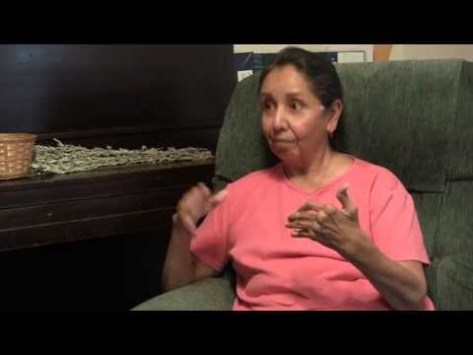
This interview doesn’t contain the full spectrum of harsh winter and overcrowding situation at that point in time; the situation was considered an emergency and the doors were never closed no matter how many people came in the door. The staff did a great job considering the mass amount of people in need but Vancouver has always been a homeless hub of Canada and will forever need more funding and staff.

-Nina