
Tag Archives: Zen
Buddhism and its Transgender History.
A person described as transgendered or transsexual usually identifies as, and desires to live and be accepted as, a member of the sex opposite to that indicated by his or her body. Thus some individuals have a strong feeling that they are female despite having male genitals or that they are a man despite having a woman’s genitals. Such people often say that they feel they are `in the wrong body’.
Ancient Indian literature contains numerous myths about people who spontaneously changed sex, usually as a result of having desire or sometimes even just admiration, for someone of the same sex. Several such stories are also found in Buddhist sources. The commentary to the Dhammapada (5th century CE?) includes a story about a man named Soreyya who changed into a woman after becoming entranced by a certain monk’s beautiful complexion. Later he married and supposedly bore two children (Dhp-a.324).
The Tipiñaka mentions several different types of transgendered states and individuals Ý the man-like woman (vepurisikà), sexual indistinctness (sambhinna), one with the characteristics of both genders (ubhatovya¤janaka), etc. (Vin.III,129). The existence of transgenderism is taken for granted in Buddhist literature with no moral judgments made about it.
Various theories have been posited to explain transgenderism; that it is a psychological or hormonal disorder or that it has genetic or environmental causes. The Buddhist doctrine of rebirth could help explain transgenderism. A person may be reborn as, say, a woman in numerous successive lives during which time feminine attitudes, desires, traits and dispositions become strongly imprinted on the mind. This would determine that she be continually reborn into a female body or that her consciousness would shape the new embryo into a female form; whatever factors are responsible for the physical characteristic of gender. Then, for either kammic, genetic or other reasons, the person may be reborn into a male body while retaining all the long-established feminine psychological traits.
If this or something like it, is the cause of transgenderism, it would mean that this condition is a natural one rather than a moral perversion as some religions maintain. The Buddha said that traits or dispositions (vàsasà) developed through a succession of lives (abbokiõõanã) may well express themselves in the present life and not be an inner moral fault (dosatara) of anything done now (Ud.28).
Transgenderism has presumably existed in all Buddhist societies as it does everywhere else. However, transgendered people seem to be particularly visible and common in Thailand. The Thai word kathoey is used loosely for effeminate homosexuals, transvestites and particularly for transgendered people. Although such people have a degree of acceptance in Thailand, probably because of the general tolerance encouraged by Buddhism, they still face numerous social and legal difficulties. A jurisdiction in which the Dhamma was genuinely applied would recognize transgendered peoples’ specific needs and allow them to legally change their gender if and when they undergo gender reassignment surgery. –
Article source below.
Sincerely Nina
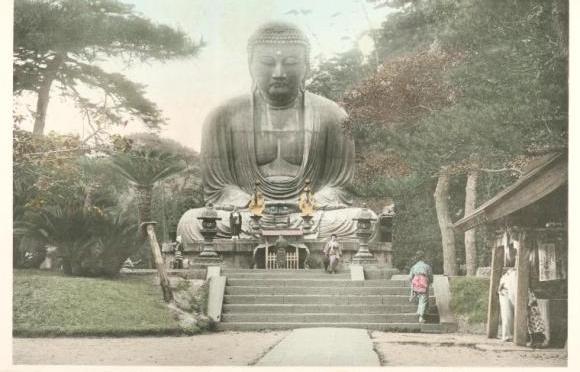
Story of Buddha by Nina Yin
“The importance of oneself.
Should not be important at all.
In essence we are natural.
But natural is not our essence
Until we are enlightened”
-Nina
Buddha’s mother couldn’t get pregnant, one night she had a dream, visited by an elephant carrying a lotus, the elephant touched the side of her stomach.
The Queen was pregnant.
After Buddha’s birth he was taken to a guru.
Born into a royal family
Saddat (Buddha) was to be a ruling king that the world had never seen….or a holy man (The Buddha) said the Guru.
His father tried desperately to hide the truth for many years, wishing he would never see suffering, and forever was to be indulging him in Luxury.
Saddat lived luxurious for many years but needed to find enlightenment, to understand his questions of life not found in self indulgence.
Saddat ran from the castle, his family and wealth.
He shaved his head and lived in homelessness.
-In Buddhism: Peace is found in poverty and without worldly things.-
After countless years of different practices and teachings.
Starving oneself for many years, practicing ancient rituals and studying….
Saddat took up starving oneself, thinking the key to enlightenment was to be without anything human to need nothing…
….he became but a skeleton…
His eyes deep in his skull like a light at a bottom of a dark well.
This was not the way.
Saddat was the most malnourished, deep in this practice.
But one day.
He got up from meditation.
He was given rice porridge by a woman walking by.
The others were shocked and exclaimed “Saddat loves luxury!”
Ashamed of him, but.
Buddha realized
There is good, in our lives, good that we need and is important.
Under a the boddhi tree sat meditating.
The Sun moved through the sky but the shadow of his tree did not move, the tree kept him comfortable,
He touched the ground connected with the universe and unto Buddha he became.
People from all over sought his teachings.
He taught for many more years to his disciples.
Noble truths,
compassion
and the way
enlightenment.
“It’s time for me to go”. He exclaimed.
“I will be in Nirvana”.
*Enlightened*, placing his hand to the earth.
leaving his teachings behind.
Forever.
-Nina Yin
Without Fear : Zen Master
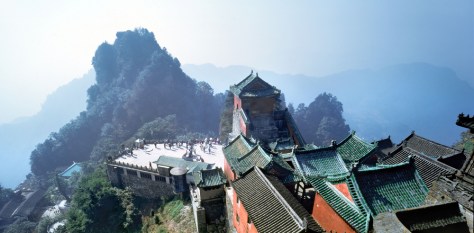
Without Fear
|
During the civil wars in feudal Japan, an invading army would quickly sweep into a town and take control. In one particular village, everyone fled just before the army arrived – everyone except the Zen master. Curious about this old fellow, the general went to the temple to see for himself what kind of man this master was. When he wasn’t treated with the deference and submissiveness to which he was accustomed, the general burst into anger. “You fool,” he shouted as he reached for his sword, “don’t you realize you are standing before a man who could run you through without blinking an eye!” But despite the threat, the master seemed unmoved. “And do you realize,” the master replied calmly, “that you are standing before a man who can be run through without blinking an eye?” |
“”Happy are those who do not fear death. They know no fear and therefore cannot be controlled.”
– Nina
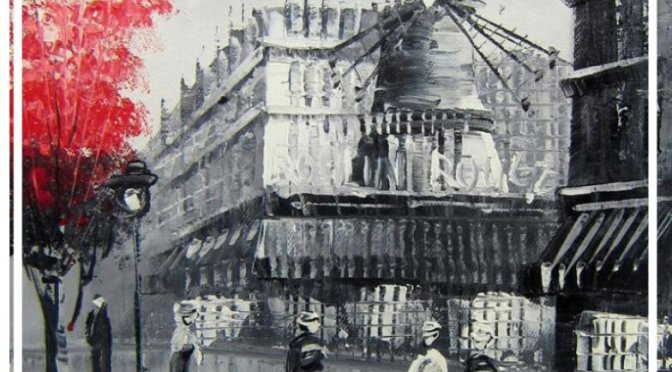
Masterpiece and Spontaneity. A zen story.
Masterpiece
|
A master calligrapher was writing some characters onto a piece of paper. One of his especially perceptive students was watching him. When the calligrapher was finished, he asked for the student’s opinion – who immediately told him that it wasn’t any good. The master tried again, but the student criticized the work again. Over and over, the calligrapher carefully redrew the same characters, and each time the student rejected it. Finally, when the student had turned his attention away to something else and wasn’t watching, the master seized the opportunity to quickly dash off the characters. “There! How’s that?,” he asked the student. The student turned to look. “THAT…. is a masterpiece!” he exclaimed. |
Meanings: “Originality is what makes each of us a masterpiece. Don’t stick to the same old way of doing things.”
“Stop thinking and just do what’s natural for you, instead of what’s expected. Some of our best work is done when we least expect it.”
“You can’t perform perfectly under the watch of critical eyes. When you don’t force perfection, it happens by itself, spontaneously. Great things happen when you least suspect it.”
“Whenever you watch over someone you make them self-conscious and uncreative. It’s like trying to teach a child. If you let them alone they will usually figure it out themselves and it will be great.” – See
Te Quiero – Nina
Your soul is fire. I love it’s taste….
Longing embrace await patient in grace….
Eyes of baby blue ice in the arctic. I look inside and I see myself in you.
You carry an aura of beautiful stride and your laughter is my contagious medicine.
Together, inseparable tethered soft as a feather.
Delicate flower in the winds of this world, I want to keep you forever.
Nina
Myself: Pt. 3
Getting a little used to writing about myself now…
I am a self taught and self proclaimed Zen Buddhist and I’m not sure how to explain that; but it is who I am and how I like to see myself. I see Buddhism in a way different from anything I’ve ever encountered and I like to instill that aspect in my work as a blogger as much as possible.
Being transgender isn’t a huge aspect of my blogging perhaps that’s a good thing, although I would really like to instill hope and inspiration to other trans readers. I look for other trans bloggers which has been cool but it would be nice to have more in my reader to be quite honest. I love everyone and even moreso for any oppressed population.
I love reading others poetry on my feed, sometimes seeing reflections of myself or something of great value: a learning experience. I seek out artists and writers, activists and poets, filmmakers and photographers…any art can inspire me so continue that list with your positive imagination. I wish the world was more artistic and less materialistic. I find a mass amount of it in society and we should all try to change this…
Nina*
With the Flow: Zen Stories
 A Taoist story tells of an old man who accidentally fell into the river rapids leading to a high and dangerous waterfall. A Taoist story tells of an old man who accidentally fell into the river rapids leading to a high and dangerous waterfall.
Onlookers feared for his life. Miraculously, he came out alive and unharmed downstream at the bottom of the falls. People asked him how he managed to survive… “I accommodated myself to the water, not the water to me. Without thinking, I allowed myself to be shaped by it. Plunging into the swirl, I came out with the swirl. This is how I survived.”
-Zen Story |

Sun Tzu – The Supreme Art
The supreme art of war is to subdue the enemy without fighting.
– Sun Tzu
Misty Rain on Mt. Lu – Su Tung-P’o
“Misty rain on Mount Lu,
and waves surging in Che-chiang.
When you have not yet been there,
many a regret surely you have;
but once there and heading homeward,
how matter-of-fact everything looks!
Misty rain on Mount Lu,
and waves surging in Che-chiang.”
—- Su Tung-P’o


You must be logged in to post a comment.