
Category Archives: Buddhism
Zen Poetry: The trouble is. – Nina
I was fine with the struggle but the trouble is…
“The struggle is,”.
Beautiful the struggle is…
But painful, the words mustering.
It’s said life is suffering.
I attempt to uproot But the trouble is; the suffering.
“Has deep roots “.
I must attempt to uncover this…
Where did all begin? I’m wondering…
The trouble is, wondering the suffering roots is;
“uncomforting…”.
Meditating on uncomforting subjectives, suffering and
All of a sudden I find nothingness*
Even the monk searches by searching “nothingness,”.
The trouble is…
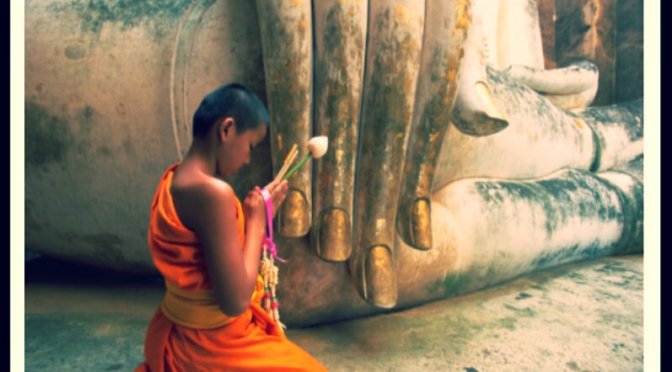
Bowing this morning.
Bowing my head to the east
through the darkness.
The journey cannot be described by words.
Complete stillness.
We visualize without knowing it; For telling.
Do you feel the gravitational pull of the Way.
Close your eyes….
When one bows in respect to all Buddhas, a feeling of reverence arises in your heart, and animates your actions and speech. You express this feeling by bowing to all Buddhas. The practice gets rid of both obstacles of arrogance and ego. When respect arises, you deepen your ‘good roots’ of reverence and faith.
—Avatamsaka Exegesis
Long Life to Our Teachers!
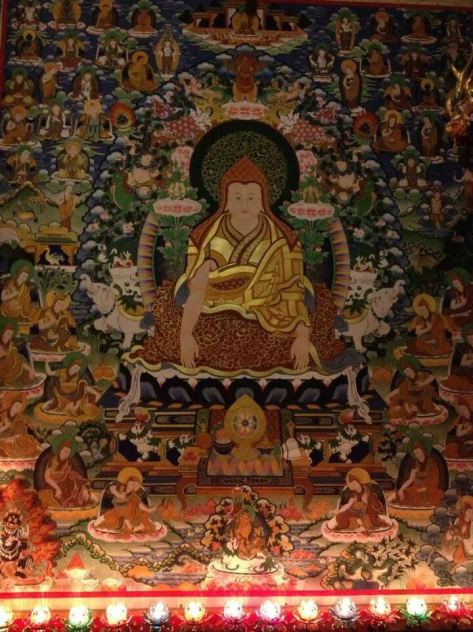 Source: Long Life to Our Teachers!
“He And She”….., Poetry by Chirayu
 Reblogged on WordPress.com
Shhhh. Listen…
You know that little voice inside your head? It’s/he/she been listening, watching… eternally.
Shhhh . . .
Listen…..
– Nina
Nina
Zen Stories: Treasure House
Open Your Own Treasure House
Daiju visited the master Baso in China. Baso asked: “What do you seek?”
“Enlightenment,” replied Daiju.
“You have your own treasure house. Why do you search outside?” Baso asked.
Daiju inquired: “Where is my treasure house?”
Baso answered: “What you are asking is your treasure house.”
Daiju was enlightened! Ever after he urged his friends: “Open your own treasure house and use those treasures.”
Buddhism and its Transgender History.
A person described as transgendered or transsexual usually identifies as, and desires to live and be accepted as, a member of the sex opposite to that indicated by his or her body. Thus some individuals have a strong feeling that they are female despite having male genitals or that they are a man despite having a woman’s genitals. Such people often say that they feel they are `in the wrong body’.
Ancient Indian literature contains numerous myths about people who spontaneously changed sex, usually as a result of having desire or sometimes even just admiration, for someone of the same sex. Several such stories are also found in Buddhist sources. The commentary to the Dhammapada (5th century CE?) includes a story about a man named Soreyya who changed into a woman after becoming entranced by a certain monk’s beautiful complexion. Later he married and supposedly bore two children (Dhp-a.324).
The Tipiñaka mentions several different types of transgendered states and individuals Ý the man-like woman (vepurisikà), sexual indistinctness (sambhinna), one with the characteristics of both genders (ubhatovya¤janaka), etc. (Vin.III,129). The existence of transgenderism is taken for granted in Buddhist literature with no moral judgments made about it.
Various theories have been posited to explain transgenderism; that it is a psychological or hormonal disorder or that it has genetic or environmental causes. The Buddhist doctrine of rebirth could help explain transgenderism. A person may be reborn as, say, a woman in numerous successive lives during which time feminine attitudes, desires, traits and dispositions become strongly imprinted on the mind. This would determine that she be continually reborn into a female body or that her consciousness would shape the new embryo into a female form; whatever factors are responsible for the physical characteristic of gender. Then, for either kammic, genetic or other reasons, the person may be reborn into a male body while retaining all the long-established feminine psychological traits.
If this or something like it, is the cause of transgenderism, it would mean that this condition is a natural one rather than a moral perversion as some religions maintain. The Buddha said that traits or dispositions (vàsasà) developed through a succession of lives (abbokiõõanã) may well express themselves in the present life and not be an inner moral fault (dosatara) of anything done now (Ud.28).
Transgenderism has presumably existed in all Buddhist societies as it does everywhere else. However, transgendered people seem to be particularly visible and common in Thailand. The Thai word kathoey is used loosely for effeminate homosexuals, transvestites and particularly for transgendered people. Although such people have a degree of acceptance in Thailand, probably because of the general tolerance encouraged by Buddhism, they still face numerous social and legal difficulties. A jurisdiction in which the Dhamma was genuinely applied would recognize transgendered peoples’ specific needs and allow them to legally change their gender if and when they undergo gender reassignment surgery. –
Article source below.
Sincerely Nina
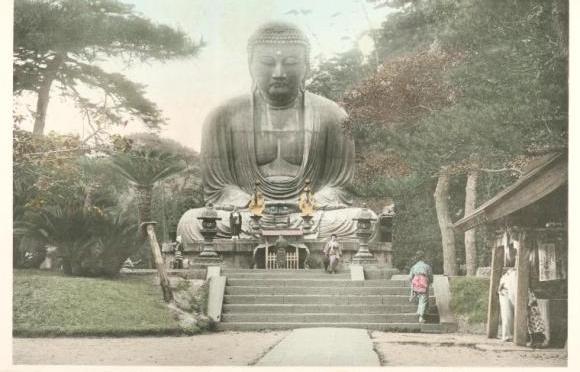
Story of Buddha by Nina Yin
“The importance of oneself.
Should not be important at all.
In essence we are natural.
But natural is not our essence
Until we are enlightened”
-Nina
Buddha’s mother couldn’t get pregnant, one night she had a dream, visited by an elephant carrying a lotus, the elephant touched the side of her stomach.
The Queen was pregnant.
After Buddha’s birth he was taken to a guru.
Born into a royal family
Saddat (Buddha) was to be a ruling king that the world had never seen….or a holy man (The Buddha) said the Guru.
His father tried desperately to hide the truth for many years, wishing he would never see suffering, and forever was to be indulging him in Luxury.
Saddat lived luxurious for many years but needed to find enlightenment, to understand his questions of life not found in self indulgence.
Saddat ran from the castle, his family and wealth.
He shaved his head and lived in homelessness.
-In Buddhism: Peace is found in poverty and without worldly things.-
After countless years of different practices and teachings.
Starving oneself for many years, practicing ancient rituals and studying….
Saddat took up starving oneself, thinking the key to enlightenment was to be without anything human to need nothing…
….he became but a skeleton…
His eyes deep in his skull like a light at a bottom of a dark well.
This was not the way.
Saddat was the most malnourished, deep in this practice.
But one day.
He got up from meditation.
He was given rice porridge by a woman walking by.
The others were shocked and exclaimed “Saddat loves luxury!”
Ashamed of him, but.
Buddha realized
There is good, in our lives, good that we need and is important.
Under a the boddhi tree sat meditating.
The Sun moved through the sky but the shadow of his tree did not move, the tree kept him comfortable,
He touched the ground connected with the universe and unto Buddha he became.
People from all over sought his teachings.
He taught for many more years to his disciples.
Noble truths,
compassion
and the way
enlightenment.
“It’s time for me to go”. He exclaimed.
“I will be in Nirvana”.
*Enlightened*, placing his hand to the earth.
leaving his teachings behind.
Forever.
-Nina Yin
Without Fear : Zen Master
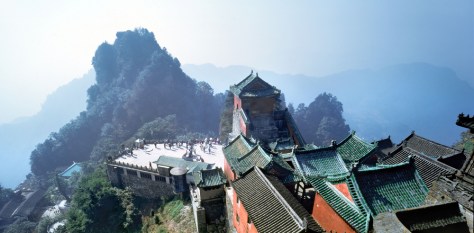
Without Fear
|
During the civil wars in feudal Japan, an invading army would quickly sweep into a town and take control. In one particular village, everyone fled just before the army arrived – everyone except the Zen master. Curious about this old fellow, the general went to the temple to see for himself what kind of man this master was. When he wasn’t treated with the deference and submissiveness to which he was accustomed, the general burst into anger. “You fool,” he shouted as he reached for his sword, “don’t you realize you are standing before a man who could run you through without blinking an eye!” But despite the threat, the master seemed unmoved. “And do you realize,” the master replied calmly, “that you are standing before a man who can be run through without blinking an eye?” |
“”Happy are those who do not fear death. They know no fear and therefore cannot be controlled.”
– Nina


You must be logged in to post a comment.